




How the Stratum AI Influencer Agent Finds Better Creators with Semantic Search
If you’ve ever used an influencer discovery tool and felt like the results were too broad, too shallow, or just not relevant enough, you’re not alone. A lot of tools rely on simple filters like follower counts, hashtags, or basic category tags. That can help you narrow things down, but it often misses the creators who are actually the best fit for your brand.
AI Generated Summary:
AUDIO FILE DOWNLOAD- Building a search strategy directly from your brief for higher‑fit results
- Using semantic analysis to understand content meaning, not just hashtags
- Profiling brand-aligned creators for lookalike discovery based on tone, audience, and style
- Reduces manual filtering and mismatches in creator shortlists: it's all in your brief that would shape the search strategy for the agent. The more details you provide, the sharper the results.
Influencer discovery is a crowded, noisy, fragmented marketplace. Each tool has its use depending on what you need or what your goals are. For communications teams, Stratum’s Influencer Agent helps to save time in research and discovery because the platform understands your brand's context. It reframes the process by using semantic search and brief‑driven strategy to find creators who actually match your brand’s tone, audience, and intent beyond keywords. In fact, for my example, it provided me with the keywords.
Instead of stopping at surface-level filters, Stratum builds a multi-layer search strategy from your brief, using semantic signals, content formats, posting patterns, and more to identify creators that are closer matches to what you actually need. If you’re working on influencer outreach, creator partnerships, or audience research, this is worth paying attention to. The difference between “a list of accounts” and “a meaningful creator shortlist” can help reduce time in research. In this post, I’m walking through how the Stratum Influencer Agent approaches discovery differently.
Start with a strong brief
The process begins on the main brief page. It's in the format of a simple questionnaire and yes, you'll need to put in some time to complete it. But the effort is worth it. A good brief might include:
- Your industry or niche
- The type of creators you want (there's a profile creator feature that you can use for this)
- Audience characteristics
- Content themes you care about
The more context you give, the more the agent can refine the search beyond generic creator matching.
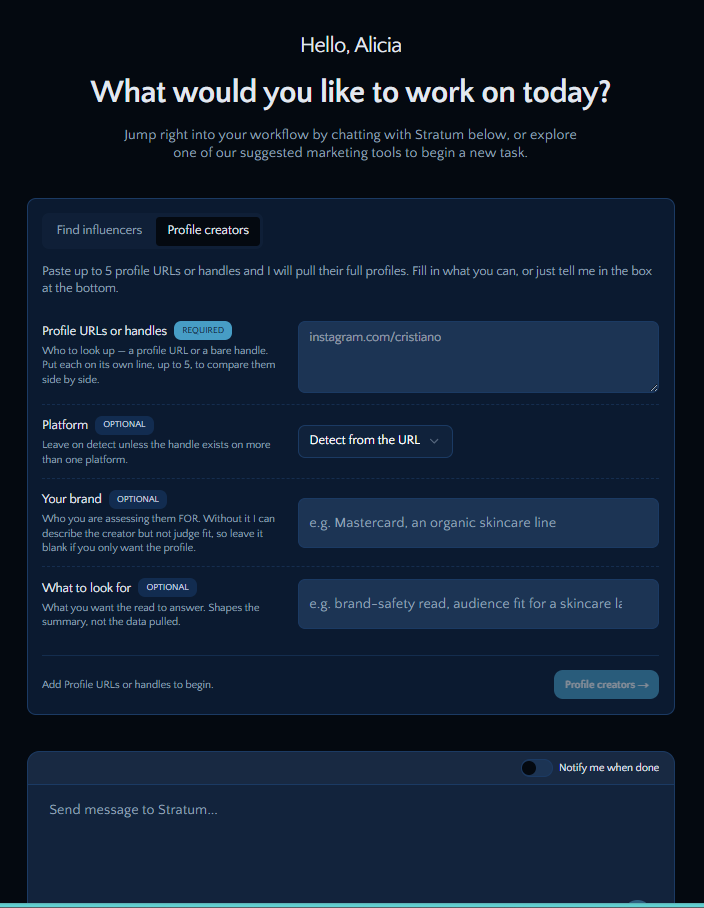
Why Profile Creators Make the Search Smarter
One of the newer features highlighted here is profile creators. This is next to the main tab 'Find Influencers'.
Where you can input the url of the creator's main profile page and you can also provide the key themes most relevant to your brand.
The Real Difference: Multi-Layer Semantic Search
This is where Stratum separates itself from many traditional influencer tools. Instead of relying only on follower counts or hashtags, it builds a multi-layer search strategy from your brief. That matters because hashtags alone can be misleading. A creator might use the right hashtag without actually producing content that aligns with your brand. Or they may have the right audience size but the wrong tone, topic depth, or posting behaviour.
In this case of the influencer discovery agent walkthrough for a B2B case study, the agent expanded the brief into an industry-specific semantic search. It looked at:
- Industry language
- Caption keywords
- Content formats
- Posting momentum
- Other contextual signals that indicate fit
This is a much more nuanced approach. Semantic search looks at meaning, not just labels. So instead of asking, “Does this creator use this exact hashtag?” it asks, “Does this creator talk about the topic in a way that matches the intent of the brief?”
A creator can check all the obvious boxes and still be the wrong choice. They may have the right follower count but a mismatched tone. They may post in the right niche but not with the right cadence. They may even engage well, but not in a way that supports your campaign goals. Semantic discovery helps reduce that gap. It gives you a shortlist that’s more likely to reflect actual brand fit, not just keyword overlap. That can make a big difference if you’re
- Building long-term creator partnerships
- Running a campaign with specific messaging
- Trying to reach a niche audience
- Comparing multiple creators quickly
Instead of spending your time filtering out bad matches, you spend more time evaluating strong candidates.
Search Strategy Approval Before the Search Commences
The agent confirms the search strategy before it starts researching. That creates a checkpoint where you can review whether the system understood your brief correctly. At this stage, I was impressed by the level of detail it provided in the search strategy just based on a basic brief. It provided the list of sub-categories and the relevant keywords around the industry's nuance that it will include as part of the search. Once you approve the search strategy, the agent goes out and does the research in real-time. Instead of relying on a static list that may already be outdated, you’re working from an active search process that responds to the criteria in your brief.
What You Can Learn from This Workflow
The biggest takeaway from this walkthrough is not just about Stratum being an AI tool for influencer discovery. It’s that the system is built around a better discovery model. Here’s what stands out:
- The context you can provide within the brief
- Profiling of creators that help anchor the strategy
- Semantic signals that improve relevance
- Mulli-layered search strategy
- Real-time research that keeps results current
Final Thoughts
What makes the Stratum Influencer Agent interesting is the way it moves beyond basic filtering that many influencer discovery platforms use. By combining a detailed brief, profile creator matching, semantics search, and real-time research, it creates a more intelligent path to creator discovery. What's more, if you are using the tool with your company's knowledge base embedded within, it will capture more of your brand's context and nuance in your search.
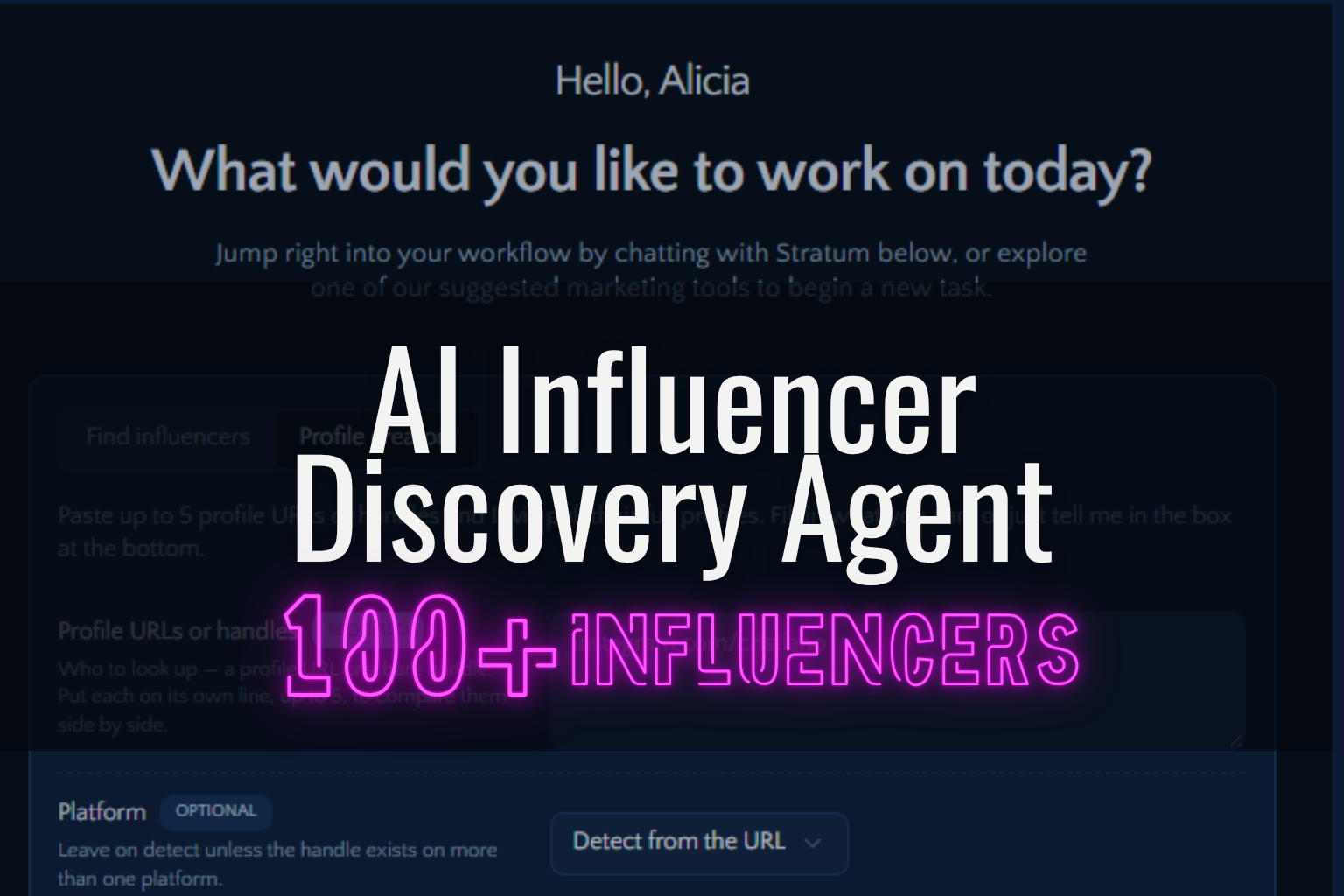
That matters because finding the right influencers is not just about volume although it's found over 100 creators. It’s about relevance, fit, and timing. If your tool can help you get closer to those three things faster, it becomes much more useful. If you’re building influencer campaigns, this is a reminder to look for tools that understand context - not just keywords. The difference shows up in the quality of your shortlist, the efficiency of your outreach, and ultimately the result sof your campaign.
Watch the walkthrough here: