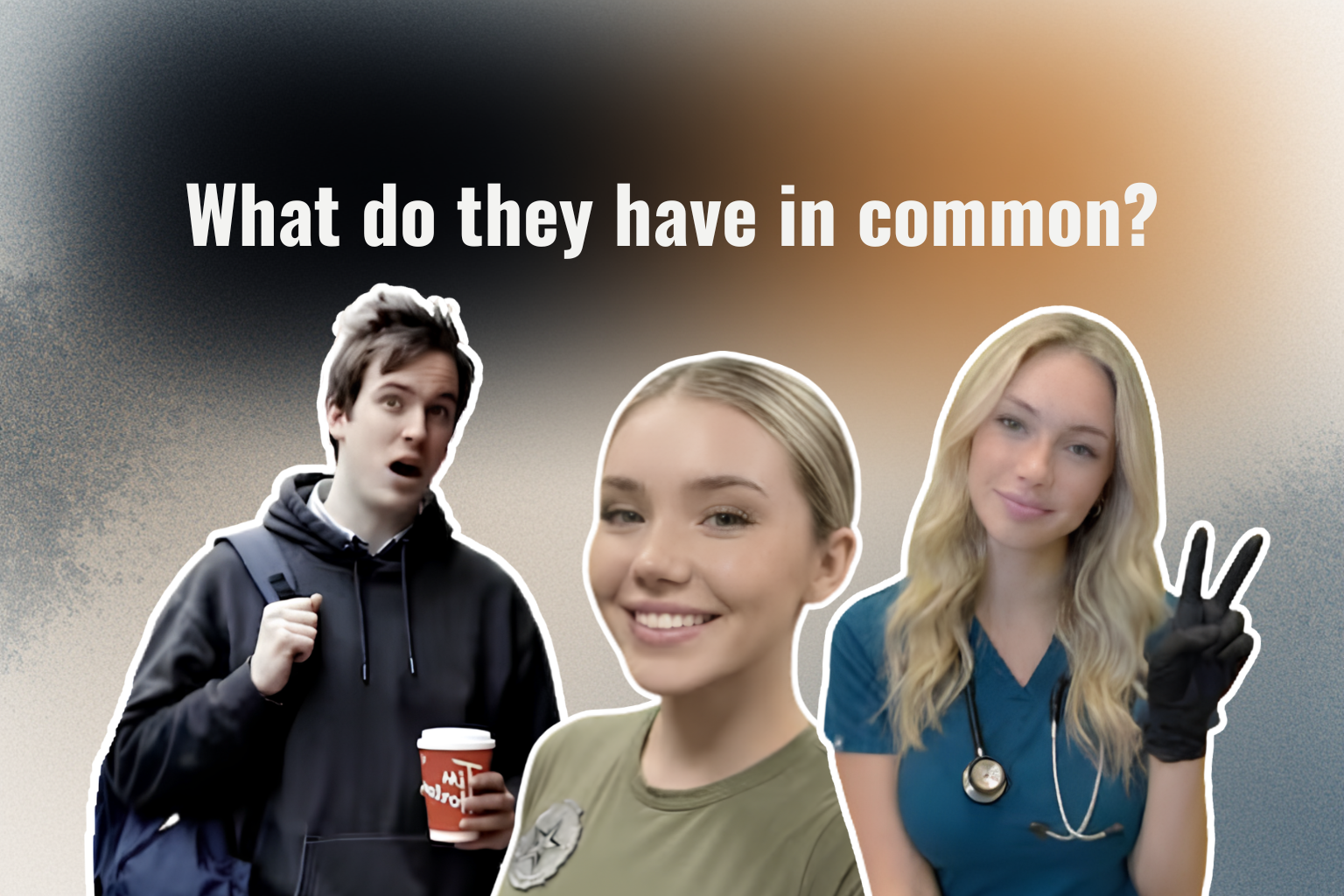
A year ago, we introduced you to Josh: an AI-generated TikTok persona with 376 followers, complaining that he couldn't get hired at Tim Hortons.
Today, synthetic personalities are building audiences that rival major creators, generating revenue from paying followers, and establishing credibility with communities that often have no idea the person behind the account doesn't actually exist.
This week, we went looking for Josh's counterparts. It turns out there are more fake AI-profiles than we know.
For years, most social platforms operated on the assumption that the overwhelming majority of accounts represented real people, with real experiences, opinions, and motivations.
We’ve come to realise that assumption is becoming increasingly unreliable.
AI-generated personas can now maintain consistent identities, produce vast amounts of content, engage directly with followers, and increasingly tailor messaging to specific audiences.
The result is a growing class of synthetic influencers capable of participating in conversations, shaping narratives, and building relationships without ever existing in the real world.
In late 2025, an Instagram account called Jessica Foster began attracting attention.
The profile presented Foster as a patriotic U.S. Army soldier, frequently posting images in military uniform, alongside fighter aircraft, and within highly engaged online communities.
Within months, the account reportedly surpassed a million followers.
Eventually, users with military experience began identifying inconsistencies. One of the most widely cited examples was a uniform name tape displaying only "Jessica," rather than following standard military naming conventions.
The account ultimately became another example of an emerging trend: highly successful online personalities built entirely from synthetic imagery and AI-generated content.
The account appears to have benefited from the same engagement mechanisms that help authentic creators grow audiences on social platforms.
Another example played out across Instagram and Fanvue.
For more than a year, a persona named Emily Hart cultivated an audience around the identity of a New York City nurse. The account blended lifestyle content, personal stories, subscription offerings, and political commentary to create a highly believable online character.
Behind the account, was a 22-year-old medical student in India who goes by "Sam." He built the entire profile using Google's Gemini for the character concept and imagery, and, by his own account to Wired, Gemini itself suggested the pivot from a generic "hot girl" persona to one who can pander to the older, conservative American audience. He then monetised a more explicit side of the account separately through Fanvue, using xAI's Grok to generate additional paid images, and sold merchandise on the side.
The story illustrates a broader shift inthe digital environment. Increasingly, online engagement isdriven less by whether a story is authentic and more by whether audiences findit believable, relatable, or emotionally compelling.
Neither Jessica Foster nor Emily Hart was built to attack a brand specifically. But they are examples of how narratives within echo chambers can carry a fabricated identity further, and faster, than most real brands can carry an authentic one, are exactly why we flagged micro-filter bubbles as the accelerant to watch in our last piece.
Once a persona is inside that kind of self-reinforcing loop, the same dynamics that can make grassroots narratives resistant to correction can also make fabricated narratives surprisingly durable. That's the part that should worry a brand more than either account's follower count.
The larger trend extends well beyond influencers.
Organisations are already grappling with AI-generated job candidates, fake reviews, synthetic customer identities, and increasingly sophisticated forms of digital impersonation.
Across industries, the cost of creating a convincing online identity continues to fall, while the cost of detecting and verifying authenticity remains comparatively high.
For communications leaders, access to data and monitoring platforms for crisis, is not the key challenge. It is better insights into how narratives are forming, spreading and measuring the impact of their messaging.